
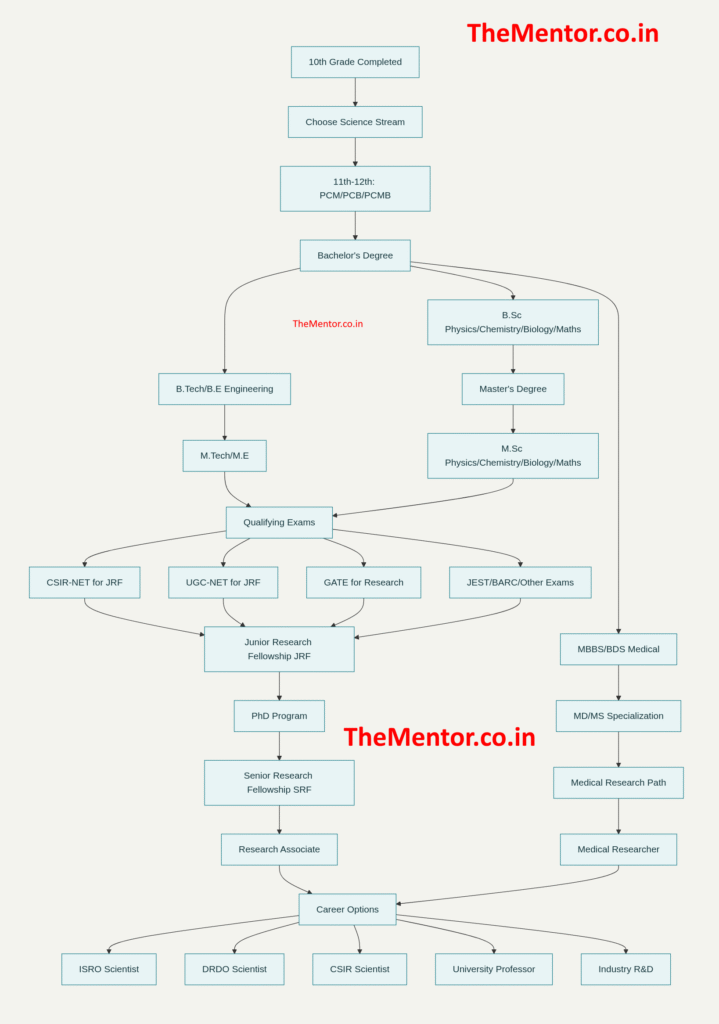
Starting from your 10th grade, you can build an amazing career as a research scientist in India. This guide will help you understand every step, from choosing the right subjects to landing your dream job at top organizations like ISRO, DRDO, and CSIR. Let’s explore this exciting journey together!
- What is a Research Career?
- Why Choose a Research Career?
- Step 1: Foundation Years (10th to 12th Grade)
- Choosing the Right Stream After 10th
- Step 2: Bachelor’s Degree (3-4 Years)
- Popular Bachelor’s Degree Options
- Key Requirements:
- Step 3: Master’s Degree (2 Years)
- Step 4: Qualifying for Research Fellowships
- Major Fellowship Exams:
- Fellowship Progression Path:
- Step 5: PhD Program (3-5 Years)
- Major Research Organizations and Their Requirements
- 1. ISRO (Indian Space Research Organization)
- 2. DRDO (Defence Research and Development Organisation)
- 3. CSIR (Council of Scientific and Industrial Research)
- 4. Universities and IITs
- Fellowship Stipend and Salary Structure
- Current Fellowship Rates (2025):
- Research Scientist Salaries:
- Skills Required for Research Success
- Technical Skills:
- Soft Skills:
- Research Fields with High Demand in 2025
- Trending Research Areas:
- Tips for Students Starting After 10th Grade
- Academic Excellence:
- Building Research Attitude:
- Preparation Strategy:
- Common Challenges and How to Overcome Them
- Challenge 1: Long Duration of Studies
- Challenge 2: Competitive Exams
- Challenge 3: Financial Concerns
- Challenge 4: Job Market Competition
- Alternative Career Paths in Research
- Industry Research and Development:
- Science Communication and Writing:
- Patent Research and Technology Transfer:
- Entrepreneurship in Deep Tech:
- Success Stories and Inspiration
- Dr. A.P.J. Abdul Kalam
- Dr. Radhika Nagpal
- Dr. Tessy Thomas
- Recent Government Initiatives Supporting Research
- National Education Policy 2020:
- Increased Research Funding:
- Prime Minister’s Research Fellowship (PMRF):
- Conclusion: Your Research Journey Starts Now
What is a Research Career?
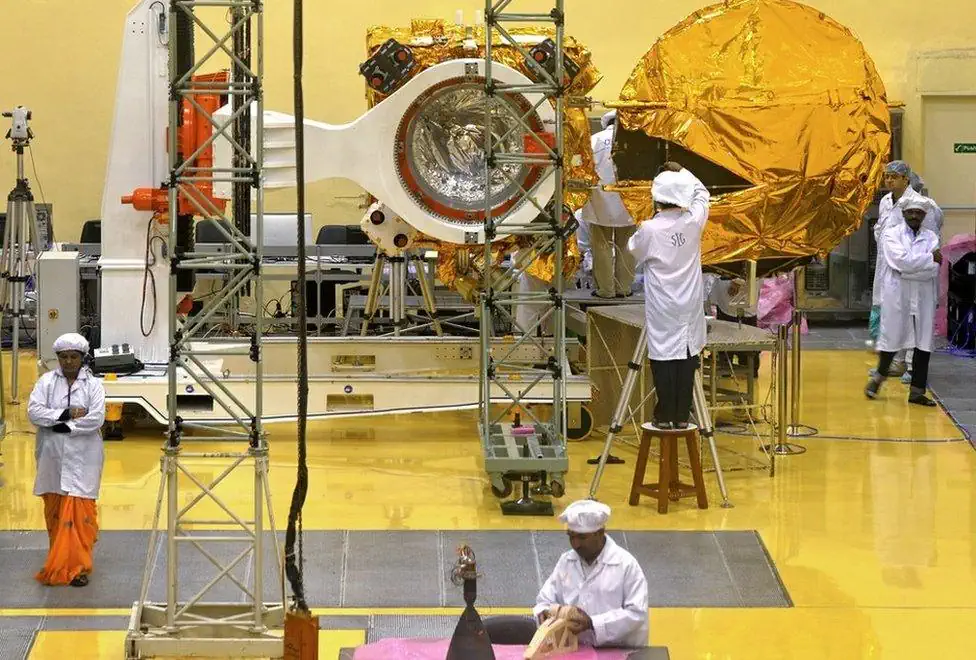
A research career means working as a scientist who discovers new things, solves problems, and creates innovations that help people. Research scientists work in laboratories, use advanced equipment, and conduct experiments to find answers to important questions. They might develop new medicines, create better technology, or explore space missions.
Why Choose a Research Career?
High Demand and Job Security: India needs more research scientists in areas like space technology, defense, medicine, and environmental science. The government is investing heavily in research and development.
Good Salary and Benefits: Research scientists earn excellent salaries. Junior Research Fellows (JRF) get ₹37,000 per month, Senior Research Fellows (SRF) earn ₹42,000 per month, and Research Associates can earn up to ₹67,000 per month. Experienced research scientists can earn ₹6-12 lakhs per year or even more.
Opportunity to Make a Difference: You can work on projects that solve real-world problems like climate change, disease treatment, or space exploration.
International Recognition: Indian research scientists are respected worldwide and get opportunities to work with international organizations.
Step 1: Foundation Years (10th to 12th Grade)
Choosing the Right Stream After 10th
After completing your 10th grade, you need to choose the Science stream for 11th and 12th grades. You have these options:
- PCM (Physics, Chemistry, Mathematics): Best for engineering and physical sciences
- PCB (Physics, Chemistry, Biology): Perfect for medical and life sciences research
- PCMB (Physics, Chemistry, Mathematics, Biology): Keeps all options open
Study Tip: Focus on building strong concepts in science and mathematics. Practice solving problems regularly and participate in science exhibitions and competitions.
Step 2: Bachelor’s Degree (3-4 Years)
Popular Bachelor’s Degree Options

For Basic Sciences:
- B.Sc. Physics, Chemistry, Biology, or Mathematics: 3-year programs that provide deep understanding of fundamental concepts
- Integrated B.Sc-M.Sc: 5-year programs offered by IISERs and some universities
For Engineering:
- B.Tech/B.E: 4-year engineering programs in various specializations
- Computer Science, Electronics, Mechanical, Civil, Biotechnology, etc.
For Medical Research:
- MBBS: For medical research careers
- B.Pharm: For pharmaceutical research
Key Requirements:
- Minimum Marks: Most programs require 50-60% marks in 12th grade
- Entrance Exams: JEE Main, JEE Advanced, NEET, IISER Aptitude Test, or state-level exams
Step 3: Master’s Degree (2 Years)
A Master’s degree is essential for most research positions. Here are your options:
Science Graduates:
- M.Sc. in your specialization (Physics, Chemistry, Biology, Mathematics)
- Minimum 55% marks required (50% for reserved categories)
Engineering Graduates:
- M.Tech/M.E. in relevant specialization
- Often requires GATE qualification
Step 4: Qualifying for Research Fellowships

This is the most important step! You need to pass national-level exams to get research fellowships:
Major Fellowship Exams:
1. CSIR-NET (Council of Scientific and Industrial Research)
- Age Limit: Maximum 30 years for JRF
- Subjects: Physics, Chemistry, Life Sciences, Mathematical Sciences, Earth Sciences
- Benefits: JRF fellowship of ₹37,000 per month
2. UGC-NET (University Grants Commission)
- Age Limit: Maximum 30 years for JRF (35 years for reserved categories)
- Subjects: 85+ subjects including humanities and social sciences
- Benefits: JRF fellowship and eligibility for Assistant Professor posts
3. GATE (Graduate Aptitude Test in Engineering)
- Age Limit: No age limit
- For: Engineering and technology research
- Benefits: Fellowship for M.Tech/PhD programs
4. Specialized Exams:
- JEST: For physics research
- BARC: For nuclear research (Age limit: 28 years)
- ICAR-JRF: For agricultural research
- ICMR-JRF: For medical research
Fellowship Progression Path:
- Junior Research Fellow (JRF): ₹37,000/month for first 2 years
- Senior Research Fellow (SRF): ₹42,000/month after 2 years
- Research Associate: ₹58,000-67,000/month after PhD
Step 5: PhD Program (3-5 Years)

A PhD is essential for senior research positions. Here’s what you need to know:
Admission Requirements:
- Master’s degree with minimum 55% marks
- Valid NET/GATE/Fellowship qualification
- Research proposal and interview
During PhD:
- Conduct original research
- Publish research papers in international journals
- Present at conferences
- Complete coursework requirements
Benefits:
- Monthly stipend (₹37,000-42,000)
- Research grants and travel allowances
- Opportunity to work with leading scientists
Major Research Organizations and Their Requirements
1. ISRO (Indian Space Research Organization)
Entry Requirements:
- Age Limit: 18-30 years (35 years through GATE)
- Education: M.E./M.Tech or equivalent with 65% marks
- Subjects: Electronics, Mechanical, Electrical, Computer Science, Physics, etc.
- Selection: Written exam + Interview
Career Path: Scientist/Engineer → Senior Scientist → Outstanding Scientist → Distinguished Scientist
2. DRDO (Defence Research and Development Organisation)
Entry Requirements:
- Age Limit:
- General: 35 years
- OBC: 38 years
- SC/ST: 40 years
- Education: First-class B.E./B.Tech + GATE score or 80% from IIT/NIT
- Experience:
- Scientist B: Fresher entry
- Scientist C: 3+ years experience
- Higher levels: 7-15+ years experience
Research Areas: Defense technology, robotics, missiles, aircraft, electronics warfare
3. CSIR (Council of Scientific and Industrial Research)
Entry Requirements:
- CSIR-NET qualification for JRF/SRF
- PhD for Scientist positions
- Post-doctoral experience preferred
40+ CSIR Labs across India working on:
- Chemistry and materials
- Biology and medicine
- Physics and engineering
- Earth and environmental sciences
4. Universities and IITs
Entry Requirements:
- PhD + Post-doctoral experience
- Strong publication record
- NET qualification often required
Positions: Assistant Professor → Associate Professor → Professor
Fellowship Stipend and Salary Structure
Current Fellowship Rates (2025):
| Position | Monthly Stipend | Additional Benefits |
|---|---|---|
| JRF (1st-2nd year) | ₹37,000 | HRA + Medical benefits |
| SRF (3rd-5th year) | ₹42,000 | Research grants |
| Research Associate-I | ₹58,000 | Higher research grants |
| Research Associate-II | ₹61,000 | Conference travel |
| Research Associate-III | ₹67,000 | International exposure |
Research Scientist Salaries:
- Entry Level: ₹6-12 lakhs per year
- Mid-Level: ₹12-20 lakhs per year
- Senior Level: ₹20-40+ lakhs per year
- ISRO/DRDO Scientists: Government pay scales with additional benefits
Skills Required for Research Success
Technical Skills:
- Strong foundation in mathematics and science
- Computer programming (Python, MATLAB, R)
- Data analysis and statistical methods
- Laboratory techniques and equipment handling
- Research methodology and scientific writing
Soft Skills:
- Critical thinking: Ability to analyze problems logically
- Communication: Writing research papers and presenting findings
- Teamwork: Collaborating with other researchers
- Time management: Managing long-term research projects
- Curiosity: Constant desire to learn and discover
Research Fields with High Demand in 2025
Trending Research Areas:
1. Artificial Intelligence and Machine Learning
- Applications in healthcare, defense, and space technology
- High industry demand and government support
2. Biotechnology and Medical Research
- Drug discovery and personalized medicine
- Growing pharmaceutical industry in India
3. Environmental Science and Climate Research
- Addressing climate change and pollution
- Green technology development
4. Space Technology and Astronomy
- ISRO’s expanding missions to Moon, Mars, and beyond
- Satellite technology and space exploration
5. Defense and Security Technology
- Cybersecurity research
- Advanced weapons and communication systems
6. Energy Research
- Solar and renewable energy
- Nuclear technology and safety
7. Data Science and Computational Biology
- Big data analysis in healthcare and genomics
- Computational modeling and simulation
Tips for Students Starting After 10th Grade
Academic Excellence:
- Focus on Concepts: Understand the ‘why’ behind scientific principles
- Practice Regularly: Solve numerical problems and conduct experiments
- Read Science Journals: Stay updated with latest discoveries
- Participate in Competitions: Science olympiads and research competitions
Building Research Attitude:
- Ask Questions: Develop curiosity about how things work
- Observe Carefully: Notice patterns and anomalies in daily life
- Document Everything: Keep a science diary of observations
- Connect with Mentors: Find teachers or professionals who can guide you
Preparation Strategy:
- Start Early: Begin preparing for entrance exams from 11th grade
- Take Mock Tests: Regular practice with online tests
- Join Study Groups: Learn with peers and discuss concepts
- Attend Science Fairs: Expose yourself to research environments
Common Challenges and How to Overcome Them
Challenge 1: Long Duration of Studies
Solution: Remember that the journey builds expertise gradually. Each step prepares you for the next level.
Challenge 2: Competitive Exams
Solution: Start preparation early, use quality study materials, and take regular mock tests.
Challenge 3: Financial Concerns
Solution: Government fellowships provide good stipends. Many universities offer fee waivers for meritorious students.
Challenge 4: Job Market Competition
Solution: Develop both technical and soft skills. Build a strong network through conferences and professional associations.
Alternative Career Paths in Research
If traditional research doesn’t appeal to you, consider these related careers:
Industry Research and Development:
- Companies: Tata Consultancy Services, Infosys, Wipro, Reliance, etc.
- Roles: R&D Engineer, Product Development Scientist
- Benefits: Higher salaries, faster career growth
Science Communication and Writing:
- Roles: Science journalist, Technical writer, Content developer
- Skills: Strong writing ability + science background
Patent Research and Technology Transfer:
- Roles: Patent analyst, Technology transfer specialist
- Growth: Expanding field with good career prospects
Entrepreneurship in Deep Tech:
- Opportunity: Start research-based companies
- Support: Government schemes like Startup India, BIRAC funding
Success Stories and Inspiration
Dr. A.P.J. Abdul Kalam
Started from humble beginnings, became a rocket scientist at ISRO, and later became President of India. His journey shows how dedication to research can lead to extraordinary success.
Dr. Radhika Nagpal
Indian-origin computer scientist who pioneered robotics research. Now works at leading institutions and has her own research lab.
Dr. Tessy Thomas
Known as the “Missile Woman of India,” she leads advanced missile development at DRDO, proving that women can excel in defense research.
Recent Government Initiatives Supporting Research
National Education Policy 2020:
- Emphasis on research and innovation
- Multidisciplinary approach to education
- Research internships for undergraduates
Increased Research Funding:
- Fellowship stipends increased by 19-20%
- Additional ₹725 crore allocated for research support
- New research institutes and labs being established
Prime Minister’s Research Fellowship (PMRF):
- Premium fellowship program
- Higher stipends for exceptional students
- Direct admission to top IITs and IISc
Conclusion: Your Research Journey Starts Now
A research career in India offers incredible opportunities for growth, impact, and financial success. The pathway may seem long, but each step builds valuable skills and knowledge. With proper planning, dedication, and the right guidance, you can achieve your dream of becoming a research scientist.
Key Takeaways:
- Start building strong science fundamentals from 11th grade
- Choose the right bachelor’s and master’s programs
- Qualify for national fellowships (NET/GATE/JRF)
- Pursue PhD from reputed institutions
- Target leading organizations like ISRO, DRDO, CSIR
- Develop both technical and soft skills
- Stay updated with emerging research fields
Remember, every great scientist started exactly where you are now. The only difference is they took the first step. Your research journey begins with the choices you make today!
Start planning your research career path today, and become part of India’s scientific revolution!